
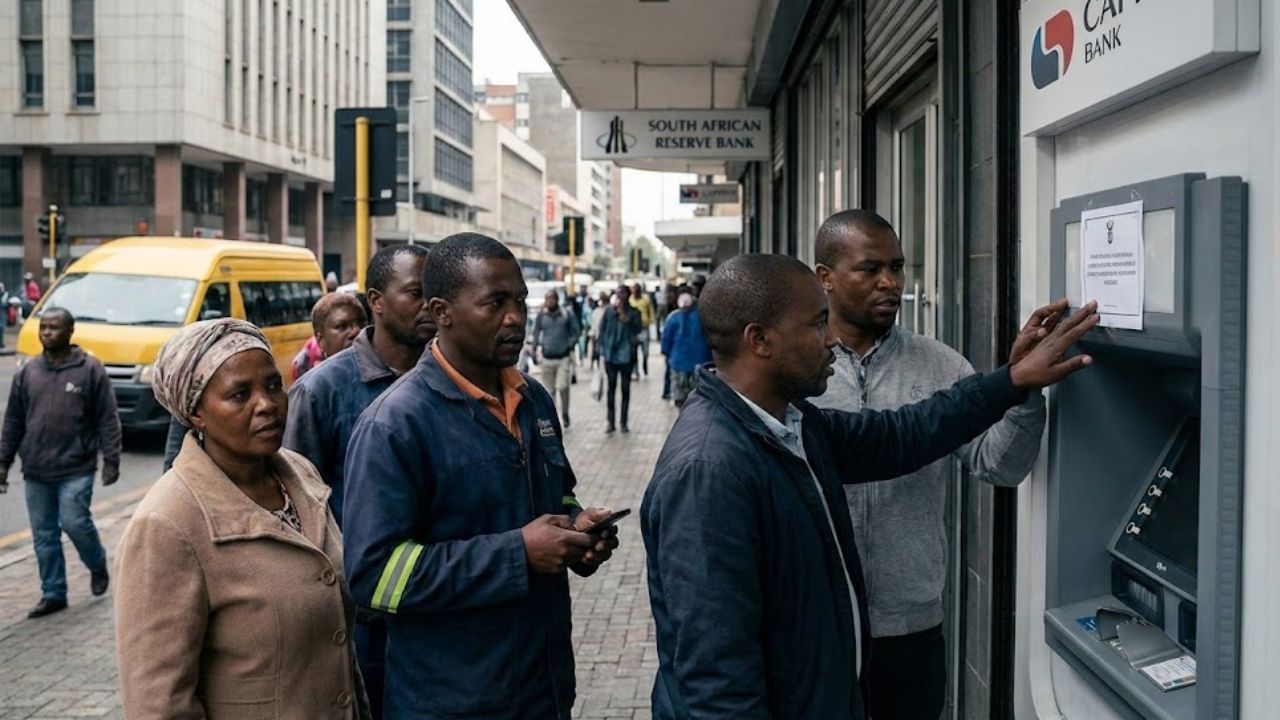
Starting from February 2 2026 people who use banks in South Africa will notice changes to how much cash they can withdraw with their debit and ATM cards. The South African Reserve Bank & the Financial Sector Conduct Authority have released new rules that set different daily & monthly withdrawal limits. The goal is to reduce fraud and make banking safer while also helping banks manage their cash better. These changes will affect millions of people who use their cards to get cash for daily expenses or small business needs or to collect social grants. Many people are talking about this announcement because it impacts pensioners and SASSA grant recipients and low-income families who depend on ATMs to access their money. This article explains the new rules and shows who will be affected most & offers advice on how South Africans can adjust to these banking changes. The new withdrawal limits vary depending on what type of account you have. Standard savings accounts now have a daily withdrawal limit of R5000 and a monthly limit of R25000. Current accounts allow R10000 per day and R50000 per month. Basic bank accounts which are often used by grant recipients have lower limits of R2000 daily and R8000 monthly. Premium accounts offer higher limits at R20000 per day and R100000 per month. These limits apply to all ATM withdrawals and point-of-sale cash-back transactions. The restrictions do not affect electronic payments or card purchases at stores. Banks will monitor accounts automatically and block any withdrawal attempts that exceed these limits. The people most affected by these changes include SASSA beneficiaries who collect grants in cash & elderly pensioners who prefer using ATMs over digital banking & informal traders who operate cash-based businesses and rural communities with limited access to card payment systems.

Why South Africa Is Reducing Card Withdrawal Limits
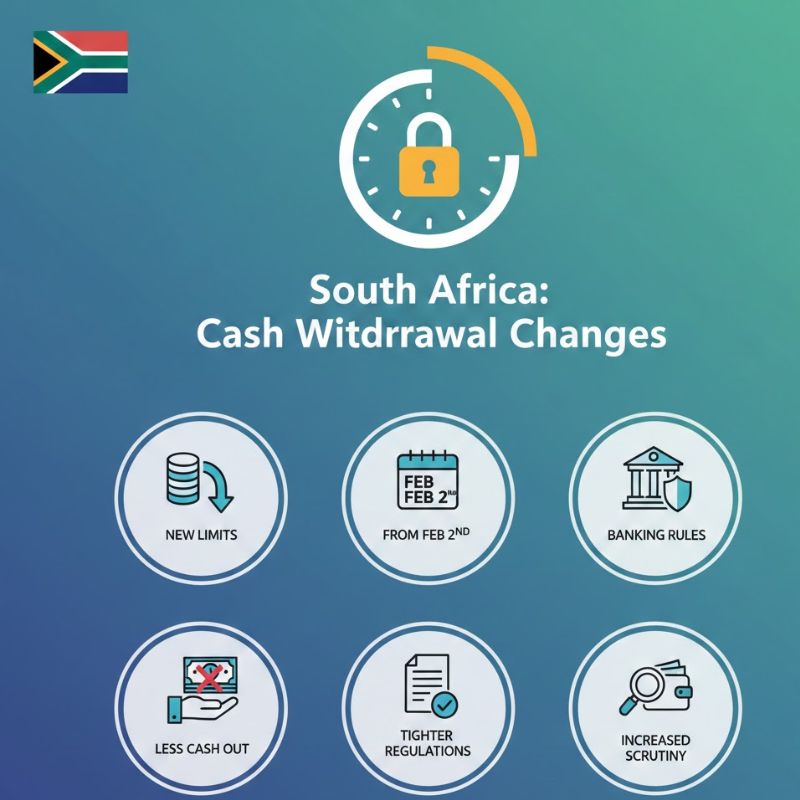
South Africa is tightening card withdrawal rules as cash-related crime continues to rise across the country. Incidents such as ATM bombings, card cloning, and skimming have increased sharply, pushing banks and regulators to act. Alongside this, the rapid growth of digital banking platforms is accelerating the move toward safer, more controlled financial systems. The revised rules, effective from February 2, are designed to reduce risk in high-fraud urban areas, protect grant beneficiaries, limit illegal cash circulation, and encourage a shift toward cashless transactions.
New ATM and Debit Card Withdrawal Limits From February 2
Starting February 2, major South African banks will introduce revised ATM withdrawal and debit card limits. These caps aim to strengthen transaction monitoring and curb excessive cash movement. Below is a summary of the updated daily and monthly withdrawal limits by bank.
 South Africa Two-Pot Retirement System Starts in 2026 Changing How Workers Access Pension Savings
– ABSA: R3,000 daily, R25,000 monthly
– Standard Bank: R3,500 daily, R30,000 monthly
– Capitec: R2,500 daily, R20,000 monthly
– Nedbank: R3,000 daily, R25,000 monthly
– FNB: R3,500 daily, R30,000 monthly
– TymeBank: R2,000 daily, R15,000 monthly
– African Bank: R2,500 daily, R20,000 monthly
– Discovery Bank: R3,000 daily, R25,000 monthly
These limits help reduce daily cash exposure, lower fees linked to multiple withdrawals, and support a more secure banking environment.
Who Is Most Affected by the New Rules
Although the updated limits apply to all customers, some groups may feel the impact more strongly. SASSA grant recipients who withdraw monthly child support or pension payments may need to adjust how they access funds. Small business owners dependent on daily cash turnover could face restrictions, while cash-based freelancers or individuals planning large payments may need to rely more on branch visits. Overall, the changes encourage wider use of mobile banking tools and safer non-cash payment methods.
 SASSA Opens R370 SRD 2026 Status Portal Helping Beneficiaries Track Approvals and Payment Delays
Updated Card Spending Caps at Point-of-Sale Terminals
New limits have also been introduced for point-of-sale card transactions to reduce fraud at retail and merchant terminals. These caps vary depending on the spending category.
– Groceries: R5,000 daily
– Fuel stations: R1,200 daily on debit cards
– Electronics stores: R7,000 daily
– Jewellery and gold outlets: R10,000 daily for verified users
– Online card transactions: R4,000 daily with two-factor authentication
– Unverified merchants: R500 daily limit
– Retailer cash withdrawals: R1,000 daily
These measures are intended to limit point-of-sale fraud and strengthen controls over high-risk transactions in key spending sectors.
What the Changes Mean for Card Users and Banks
The South African Reserve Bank and National Treasury view these updates as both preventive and forward-looking. With fraud-related claims rising by 12% in recent months, the adjustments aim to safeguard users while modernising financial operations. Future initiatives may include biometric ATM access, tighter controls on certain accounts, and expanded digital-only banking services. By adapting through digital wallets, careful planning, and branch visits when needed, customers can manage transactions smoothly under the new system.