
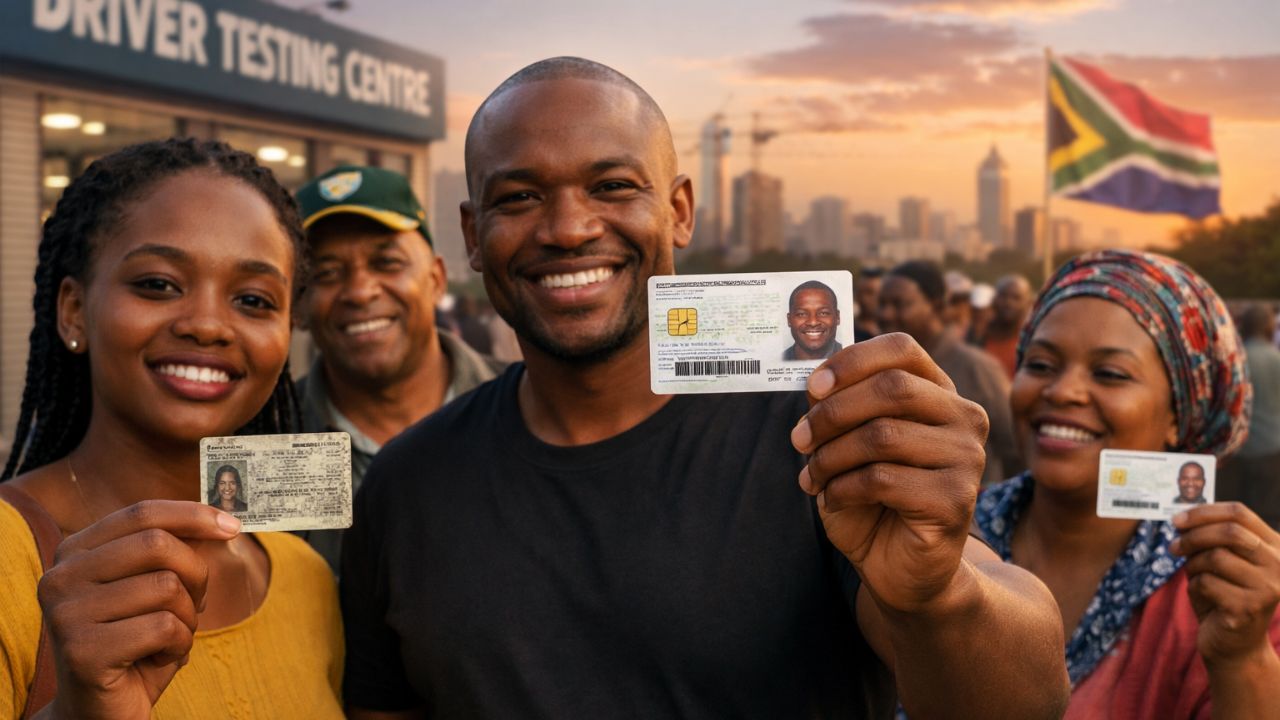
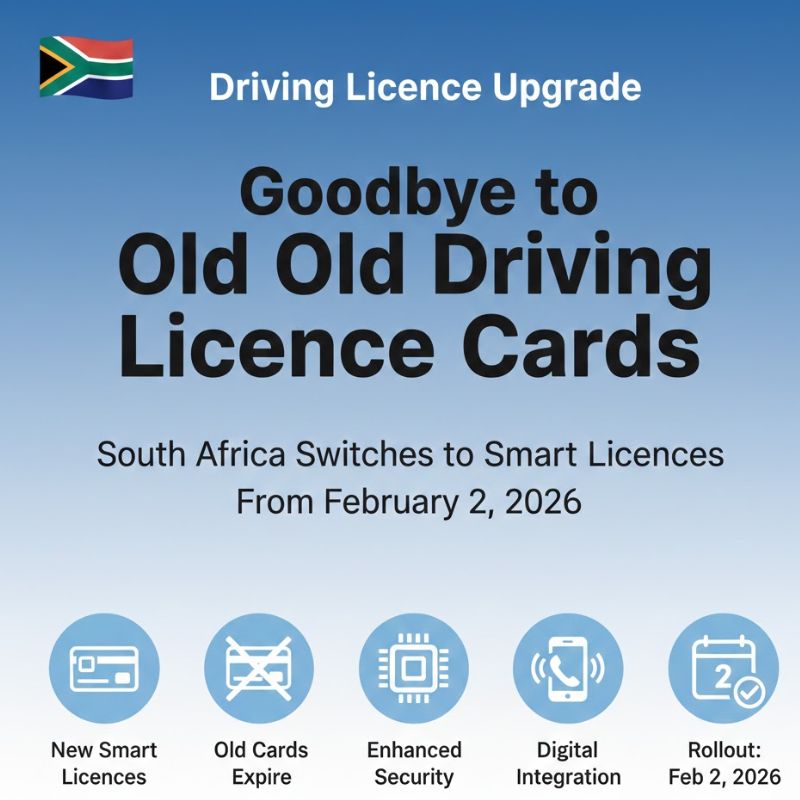
South Africa is preparing for a major shift in how drivers carry and use their licences, as the country officially moves away from traditional driving licence cards. From February 2, 2026, motorists will begin transitioning to modern smart licences designed to improve security, durability, and efficiency. This change forms part of a broader effort to modernise public services and reduce fraud within the licensing system. While the old cards will not disappear overnight, drivers are being encouraged to understand how the new system works and what steps are needed to stay compliant.

South Africa Smart Driving Licence Rollout Explained
The introduction of smart driving licences marks a significant upgrade for motorists across the country. These new cards are embedded with advanced technology that enhances identity verification and reduces the risk of duplication. Authorities say the change will help address long-standing issues such as card damage and illegal reproductions. With improved card security, digital identity checks, tamper resistant design, and longer card lifespan, the smart licence is built for everyday use. Although the rollout begins in early 2026, drivers can expect a phased transition to avoid overwhelming testing centres and administrative systems.
Why Old Licence Cards Are Being Phased Out
Traditional driving licence cards have proven vulnerable to wear, loss, and fraud over the years. Many drivers are familiar with faded details or cracked plastic that makes verification difficult. The new smart system aims to solve these issues by introducing enhanced fraud prevention, secure personal data, modern verification tools, and reliable card materials. Officials believe this move will also streamline interactions with traffic authorities and law enforcement. By standardising a smarter format, South Africa hopes to align its licensing system with global best practices.
 South Africa Two-Pot Retirement System Starts in 2026 Changing How Workers Access Pension Savings
What Drivers Should Know About Smart Licences
For most drivers, the switch to smart licences will be straightforward, but preparation is key. Motorists will need to apply for the new card through approved centres and ensure their personal details are up to date. The process is expected to mirror current renewal steps, with added security checks. Key benefits include faster identity validation, reduced card replacements, stronger legal recognition, and future digital integration. Authorities recommend keeping an eye on official updates to avoid missing important deadlines.
Summary and Practical Outlook
The move to smart driving licences represents a practical step forward for South Africa’s transport system. While change often brings uncertainty, the long-term advantages are clear. Drivers can expect simpler licence management, better roadside checks, improved data accuracy, and greater system trust over time. As February 2026 approaches, staying informed will help motorists adapt smoothly. The gradual rollout is designed to minimise disruption while delivering a more secure and efficient licensing experience nationwide.
| Feature | Old Licence Card | Smart Licence Card |
|---|---|---|
| Security Level | Basic protection | Advanced encryption |
| Durability | Easily damaged | High resistance |
| Fraud Risk | Higher risk | Significantly lower |
| Technology | None | Embedded smart chip |
| Replacement Frequency | Frequent | Less often |
Frequently Asked Questions (FAQs)
1. When does the smart licence system start?
The transition officially begins on February 2, 2026.
 SASSA Opens R370 SRD 2026 Status Portal Helping Beneficiaries Track Approvals and Payment Delays
2. Will old driving licence cards stop working immediately?
No, old cards will be phased out gradually over time.
3. Do all drivers need to apply for a smart licence?
Yes, all licensed drivers will eventually need to switch.
4. Is the application process very different?
The process is similar to current renewals with added security checks.